


 CLOSE
What does a balanced meal look like?


Last Updated on 30th October 2026 by Hannah Lloyd
There’s some truth in the old saying, ‘you are what you eat’. Everything you eat affects how your body functions. Combined with regular exercise, eating a well-balanced diet helps you to stay healthy and lowers the risk of developing heart disease, cancer and diabetes. It’s also important for your immune system, and for maintaining a healthy weight.
Your body’s needs depend on various factors including age, gender and physical activity, and will change over the course of your life. However, there are a few basic principles that make up a typical balanced meal – these apply specifically to adults, since children’s needs are slightly different.
The 5 main food groups:

Protein is essential for growing, repairing and building body tissues and cells. Needed to produce hormones and enzymes.

Carbs are the primary fuel for your brain and body. Swap refined carbs for complex carbohydrates like wholewheat pasta, brown rice, quinoa, and oats wherever possible. They are a fantastic source of fibre, which keeps your energy steady and supports a happy, healthy digestive system.

The main source of essential vitamins and minerals. Eating the rainbow ensures you get a wide variety of antioxidants. Aim to eat as many different plant-based foods a week for optimal gut health and immunity.

Helps insulate the body and cushion vital organs. It also provides energy, supports cell and hormone function, and helps the body absorb fat-soluble vitamins A, D, E and K. Omega-3 and omega-6 are essential polyunsaturated fats that the body can’t make on its own. Replacing saturated fats with unsaturated fats can help maintain healthy blood cholesterol levels and support heart health.

Dairy provides protein, calcium, iodine and vitamin B12, supporting healthy bones, muscles and thyroid function.
How much should I eat per meal?!
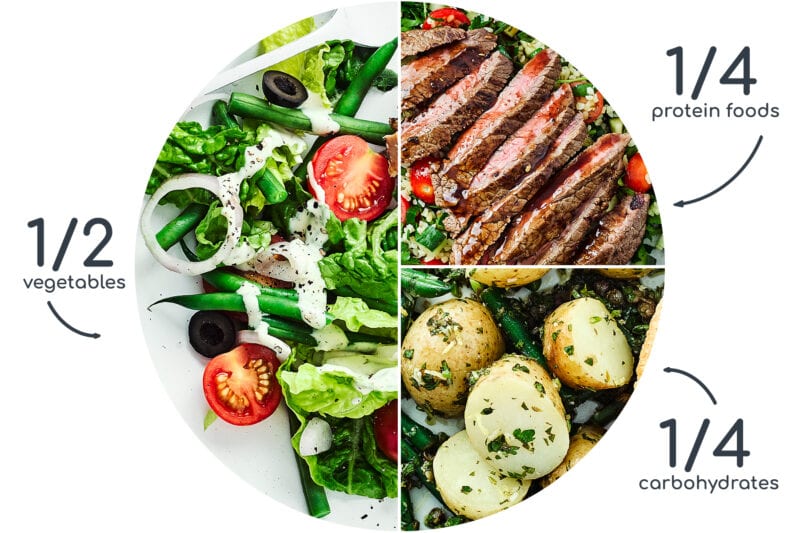
Ideally, you want your meal plate to be made up of…
- ¼ protein foods,
- ¼ carbohydrates,
- ½ vegetables.
A small portion of your meal can include dairy and fats like example oil, butter, cheese and cream.
Average Portion Sizes:
Protein
- Meat, fish and chicken, 100-125g
- Lentils and pulses, 80-100g (cooked)
- Tofu, 100g
- 2 eggs, 120g
- Nuts and seeds, 25g
Carbohydrates
- Rice, couscous and bulgur, 60g (uncooked)
- Potatoes, 170g
- Pasta, 70g (uncooked)
Vegetables
The average portion size for raw vegetables is 80g per serving
Fats: oils, butter
Approximately 10ml.
Dairy
- Cheese, 25g
- Feta, 30g
- Yoghurt, 50-100ml
- Mozzarella, 60-125g
- Crème fraiche, 50-100ml
If you have any other questions about eating balanced meals, or you’d like to know the average portion size for another food, leave a comment and I’ll respond to you as soon as possible!